

I. Why Kerala for Your Wedding?
There is a particular quality of light in Kerala in the early morning — the way it moves through coconut palms, touches the surface of backwater channels, and settles over the landscape in a haze of gold and green — that no photograph has ever quite captured, and no other place in India reliably produces. It is this quality, more than any listing of facilities, that draws couples to Kerala for their weddings.
That said, the practical case for Kerala is equally strong. The state has a long, sophisticated tradition of hosting grand celebrations — the Keralan wedding feast, or sadya, served on banana leaves to hundreds of guests at once, is itself a masterpiece of coordinated hospitality. The cuisine is extraordinary. The craft traditions — from floral arrangements using local species to hand-woven fabric and bespoke jewellery — are alive and practised. And the connectivity has improved dramatically: Kochi International Airport now has direct flights from Dubai, Abu Dhabi, Singapore, London, and major Indian metros.
For families choosing between Goa, Rajasthan, and Kerala, the distinction is often one of texture. Rajasthan offers grandeur; Goa offers ease. Kerala offers intimacy — a sense that the landscape itself is part of your celebration, and that the scale of the natural world makes even a party of 250 feel personal.
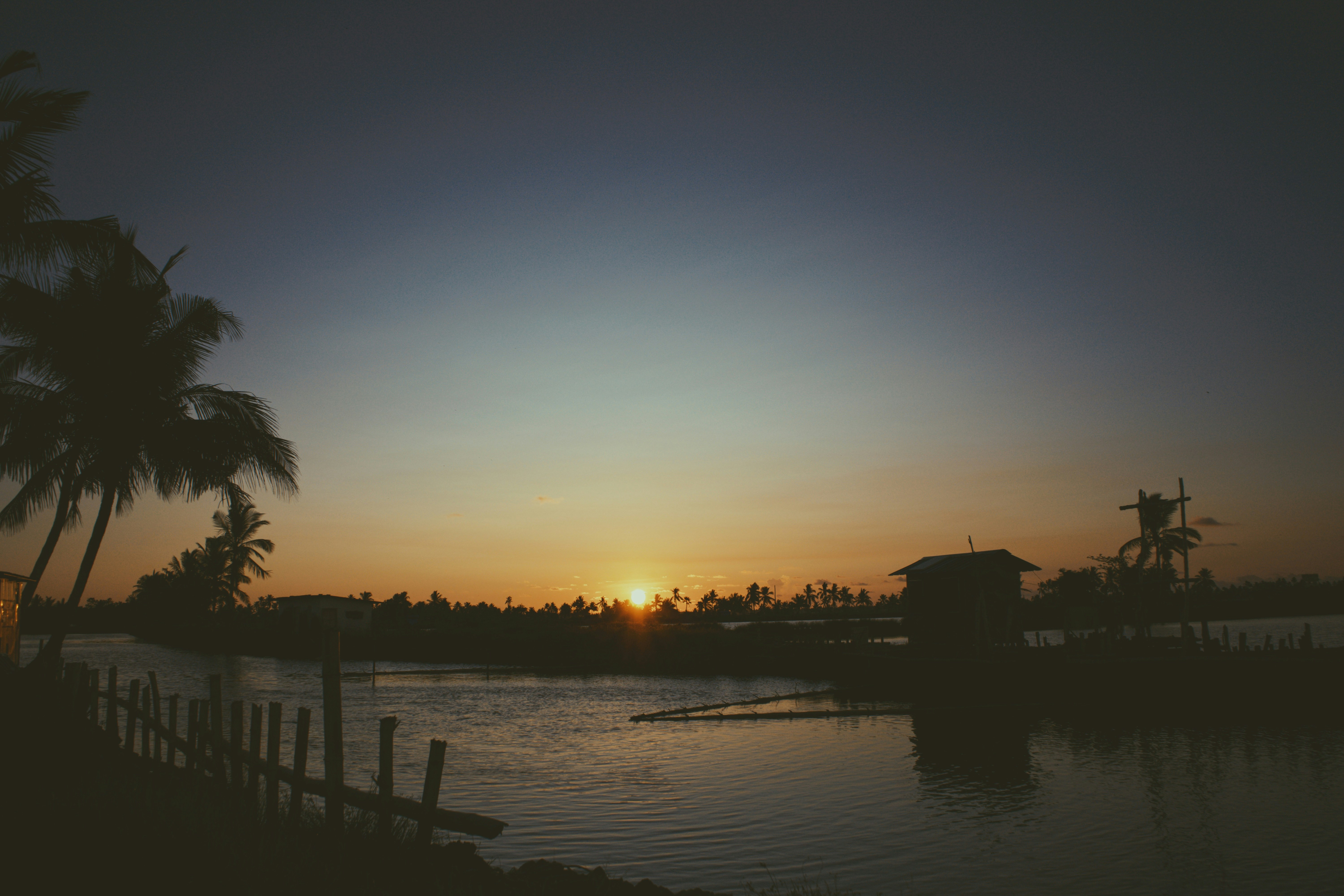
The Vayalkara backwaters at the edge of Sovnear's grounds — a setting that makes celebrations feel particular to this place and no other.
II. Private Estate vs. Luxury Hotel — What You Actually Gain
The difference between a five-star hotel wedding and a private estate wedding is not primarily a question of quality — it is a question of control, character, and exclusivity.
At a hotel, even a very fine one, your wedding is one of several events happening that day. Your guests share spaces with other guests. The aesthetic is the hotel's aesthetic. The menu is the hotel's menu, adapted slightly for your preferences. The timeline is constrained by other bookings. The coordinator is serving multiple couples.
"At a private estate, there is no other booking. The estate is yours — its character, its landscape, its staff, its schedule — entirely and exclusively."
This changes the experience in ways that are difficult to overstate. Guests don't navigate a hotel lobby to reach the ceremony. There are no strangers at breakfast the morning after. The setting — the architecture, the gardens, the ambient sound of the environment — can be genuinely your own. Children can move through the estate freely. Elderly relatives can rest without leaving the celebration. The celebration has a geography that belongs to you.
- 1Complete privacy. No other guests. No shared reception, lobby, or dining area. Your family owns the estate for the duration.
- 2Full creative control. The aesthetic, the programme, the menu, the music, the pace — all determined by you, not by a hotel's operational constraints.
- 3Authentic character. Private estates have personalities. The architecture, the landscape, the art — these give a wedding its sense of place in a way that hotel ballrooms cannot.
- 4Extended access. Most estate weddings span 48 hours or more. There is time for arrivals, for a welcome dinner, for the ceremony, for a leisurely post-wedding brunch — without rushing.
- 5A dedicated, singular team. The estate's staff is focused entirely on your event. There is no competing demand on their attention.
III. Choosing the Right Private Estate
Kerala has a growing number of private estates available for weddings, ranging from converted heritage properties to purpose-designed contemporary estates. The choice involves more than aesthetics. Here are the questions that matter most:
Key questions before you book
Is it a genuine full buyout? Some properties advertise "private" events but still allow other guests on-site. Confirm in writing that no other bookings will be active during your dates.
What is the maximum guest capacity? Not just for the ceremony, but for the dinner, the after-party, and accommodating overnight guests comfortably.
What is actually included? Catering infrastructure, furniture, lighting rigs, parking, generator backup, staff — understand what arrives with the estate and what you supply.
Who coordinates with vendors? Some estates provide a dedicated coordinator as part of the package. Others expect you to manage all external vendors yourself. For a 250-guest event, this distinction matters enormously.
What is the contingency for weather? Kerala's monsoon is real. Understand what covered structures exist and what the plan is if outdoor elements need to shift.
Sovnear sits on 4 acres of Vayalkara backwater frontage with ten distinct environments — from an open-air riverside pavilion to a covered dining hall and a rooftop terrace. As a venue-of-distinction, Sovnear provides the estate exclusively; all event delivery is handled by your chosen event management company, or by a specialist introduced from our curated partner network. This model gives you genuine creative flexibility and access to Kerala's finest specialist teams.
IV. A Realistic Planning Timeline
Private estate weddings in Kerala — particularly those spanning two days with 200+ guests — require more lead time than many couples anticipate. Here is a practical timeline, working backwards from your wedding date.
18 – 12 months before
Secure the estate and the date
Peak season weekends (October–March) at premium estates are typically booked 12–18 months in advance. Confirm the estate, agree the headline terms, and pay the holding deposit. Start discussing the broad shape of the event.
12 – 9 months before
Lock in anchor vendors
Photographer, videographer, and caterer (if external) are in highest demand and should be committed first. A good Kerala wedding photographer who works sensitively with natural light and traditional rituals may have only 20–25 peak dates available per year.
9 – 6 months before
Plan the guest experience
Guest list finalisation, accommodation planning, dietary requirements, invitations. For NRI families: coordinate travel logistics, visa questions for overseas guests, and airport transfers. Begin designing the two-day programme.
6 – 3 months before
Design and decor
Floral design brief, lighting design, stage and mandap design, linen and tableware selections. Site visit ideally happens in this window — either in person or via detailed video walkthrough for NRI families.
3 months – 4 weeks before
Fine detail and confirmations
Final guest count, menu tastings, run-of-show document, supplier briefings, ceremony choreography, sound and AV specifications. Final payment schedules confirmed.
4 weeks – wedding day
Guest communications and final coordination
Arrival schedules communicated to guests, final vendor briefings, estate setup brief. Day-before site walk with coordinator. The week itself should feel calm — the work is done.
V. Managing Guest Logistics at Scale
A 250-guest private estate wedding involves a significant logistical architecture — one that is often underestimated by couples who have only attended hotel weddings. At a hotel, the infrastructure is fixed and the operations team is experienced at absorbing guest needs. At a private estate, you are building that infrastructure.
Accommodation
Most private estates can accommodate a fraction of your total guest count on-site. At Sovnear, resident accommodation hosts 40–60 guests comfortably. For a 250-person wedding, the majority of guests will stay at nearby properties — typically a combination of Airbnb villas, heritage homestays, and nearby hotel inventory in Vayalkara and surrounding areas. Your event management team should map and pre-block this accommodation as early as possible.
Transportation
Kerala's road network is improving but remains narrow in many rural areas. Plan dedicated shuttle services between the estate and guest accommodation. For 250 guests arriving across a full day, a fleet of 4–6 AC coaches typically handles the load. Coordinate airport transfers for outstation guests as a managed service — arriving guests who are immediately cared for set the tone for the entire celebration.
On-site flow
Think of your two-day event as having three distinct populations: overnight-stay guests (40–60), day guests arriving for each event, and vendor and staff access. Each moves through the estate differently. Work with your event management team and the Sovnear estate team together to map these flows and eliminate potential friction points — parking, check-in, access to facilities — well before the day itself.
VI. Vendor Coordination at a Private Estate
A private estate wedding typically involves more external vendors than a hotel wedding — because the infrastructure that a hotel provides (catering, furniture, AV, linens) must be independently sourced and coordinated. This is not a weakness of the estate model; it is what enables the creative flexibility. But it requires an experienced coordinator to manage effectively.
- ✓Catering: Sovnear provides the full catering infrastructure — commercial kitchen, equipment, and service areas. Your event management company sources and manages the culinary team. Establishing this early with your partner saves significant coordination complexity later.
- ✓Florist: Kerala's tropical flora — bird of paradise, heliconias, anthuriums, jasmine garlands — is extraordinary and abundant. A local florist who understands the estate's existing landscape will create something very different from a florist who imports all material. We strongly advise against flying in florists unfamiliar with local supply chains.
- ✓Sound & lighting: Outdoor events in Kerala require weather-rated equipment and generators with sufficient capacity. Confirm technical specifications with your estate team before booking any A/V vendor.
- ✓Photographer & videographer: Given the natural light quality of Kerala estates — particularly around golden hour — invest in a photographer who has shot in similar environments. Ask to see full galleries, not just highlight shots.
- ✓Hair, makeup, and styling: For a multi-day event with 250 guests, you need a team with capacity. Confirm the number of artists and the scheduling plan for the wedding morning well in advance.
Sovnear maintains a curated network of preferred specialist partners — event management companies, caterers, floral directors, photographers, and production teams who have all worked at the estate directly. When you enquire, we introduce you to those best suited to your vision, budget, and event type. You make the final choice; we provide the context and the connections.
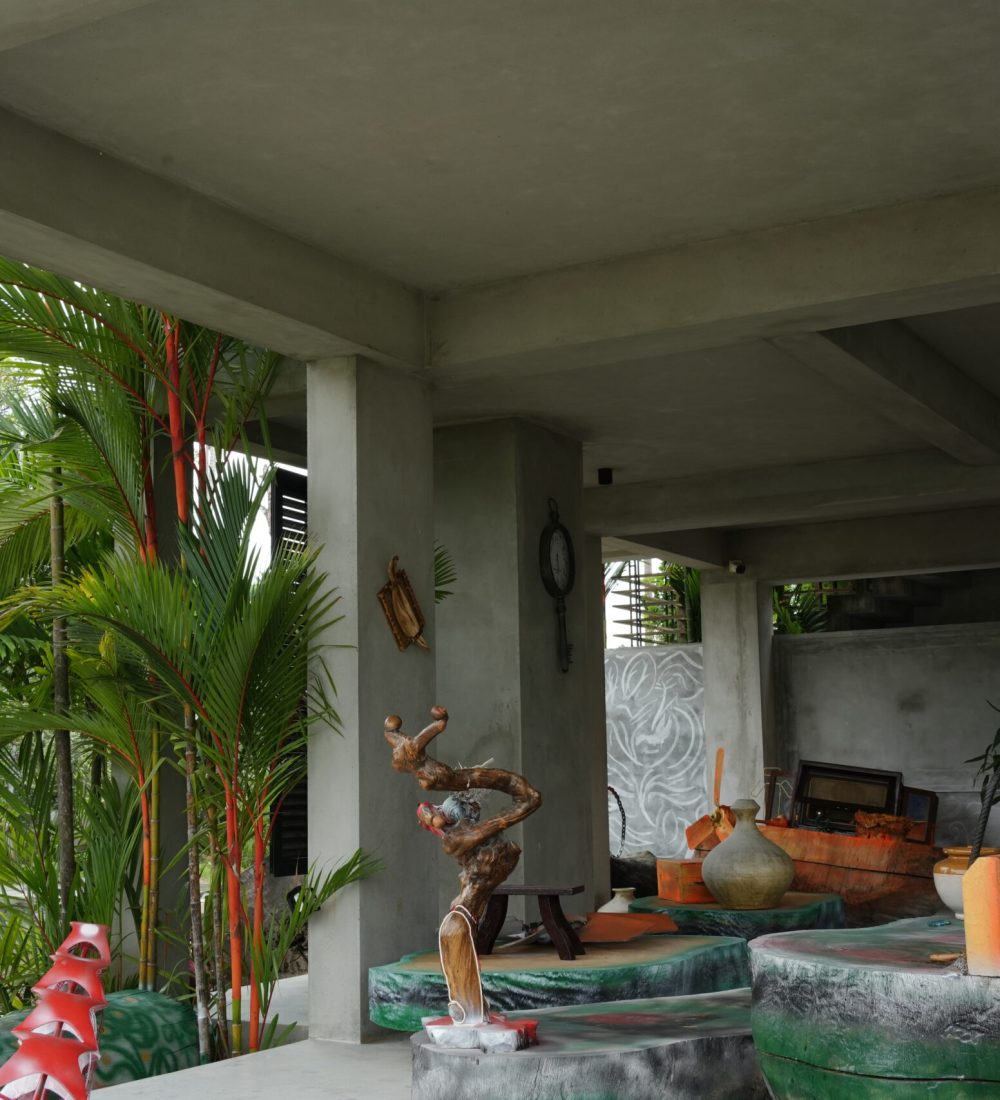
The open-air pavilion at Sovnear — one of ten distinct environments that can be configured for different moments in your celebration.
VII. Budget Considerations for a Private Estate Wedding
We write about budget candidly, because the most useful thing we can offer is honest framing rather than numbers that depend entirely on your specific choices.
A private estate wedding in Kerala for 200–300 guests across two days — with full buyout, quality catering, professional photography, floral design, and transportation — sits in a range that is roughly comparable to a comparable wedding at a leading five-star hotel. The costs are distributed differently: you pay more directly to specialist vendors, and the estate fee reflects the exclusivity rather than hidden service charges. But the total cost for a well-executed event is similar.
Where costs are concentrated
In our experience across hundreds of estate events, the three areas where couples most benefit from clear early budgeting are: catering (per-head costs escalate sharply with guest count), transportation (often underestimated for rural estates), and decor and lighting (where the blank-canvas nature of a private estate creates unlimited scope that needs to be consciously bounded).
When you enquire with us, one of the first things we'll ask is your rough budget range — not to judge it, but to help you understand what is genuinely achievable within it and where your choices will have the greatest impact. Transparency about budget early in the process saves everyone time and produces better results.
VIII. Kerala Wedding Traditions Worth Honouring
Kerala's wedding traditions are among the most refined and meaningful in South India, and one of the privileges of celebrating at a private estate in Kerala — rather than a generic luxury venue — is the opportunity to weave these traditions meaningfully into your celebration.
The Muhurtham and the sacred hour
Keralan Hindu weddings are structured around the muhurtham — the auspicious moment determined by the astrologer — which determines the timing of the core ceremony. Private estates accommodate this requirement naturally; there is no hotel's conference scheduling to work around. The entire property can be configured to support the ceremony at its appointed moment.
The Sadya
The traditional Keralan feast served on banana leaves — with its extraordinary array of rice, curries, pickles, and payasam — is one of the world's great communal meals. At a private estate, a sadya for 250 guests requires careful advance planning: sourcing banana leaves, coordinating the serving sequence, and training the service team. At Sovnear, our kitchen team has served hundreds of sadyas, and it is one of our genuine pleasures to get it right.
Music and dance
Chenda percussion, Sopana sangeetham, Ottanthullal — Kerala's musical and dance traditions are a gift to wedding celebrations and require proper staging, time, and acoustic sensitivity. A private estate allows you to build the evening's music programme around these traditions in a way that a hotel's AV system and curfew schedule rarely permit.
For families with mixed backgrounds — NRI families, intercultural marriages — a private estate is also a canvas for creative synthesis: a ceremony that honours both Keralan tradition and your own family's particular story. We have hosted Hindu, Christian, and interfaith celebrations, and the estate accommodates all of them with equal care.
Frequently Asked Questions
Begin the Conversation
Ready to plan your private estate wedding in Kerala?
Our planning team is available to discuss your dates, your guest count, and what a celebration at Sovnear might look like for your family. No obligations — just an honest conversation.


